
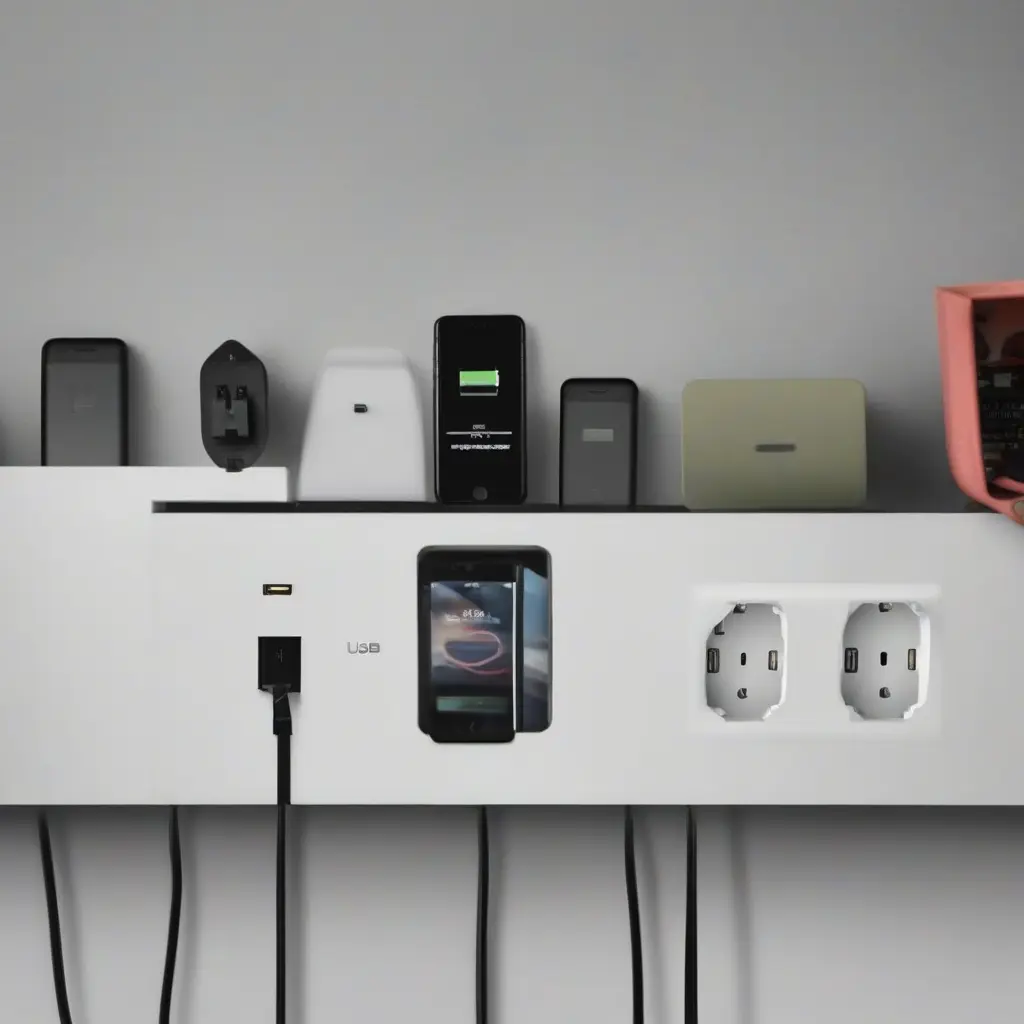
In today’s fast-paced technological world, choosing the right charger for your devices is crucial. With various options like wall chargers and USB port chargers available, knowing which one suits your needs is essential. Wall chargers plug directly into the power outlet and often provide faster charging times, while USB port chargers offer versatility for multiple devices. This article delves into the critical differences, pros and cons, and practical applications of each charger type, helping you make an informed decision tailored to your lifestyle.
Understanding Wall Chargers
Wall chargers, also known as AC adapters, connect directly to a power outlet and supply electrical power to charge devices. They typically come with a fixed or detachable cable that fits into various devices, such as smartphones, tablets, and laptops. Many wall chargers are designed to handle higher power outputs, enabling faster charging capabilities for devices that support it. This efficiency makes wall chargers an appealing option for users who frequently need their devices charged quickly while using a dedicated space at home or office.
Advantages of Wall Chargers
One of the primary advantages of wall chargers is their ability to provide faster charging times compared to other options. With higher wattage outputs, many wall chargers can charge devices quickly, making them ideal for users who are short on time. Additionally, wall chargers are often designed with safety features like overcharge protection, reducing the risk of damage to devices. Their straightforward usage without needing additional tools or adapters adds to their appeal, making them a reliable choice for charging needs.
Drawbacks of Wall Chargers
Despite their advantages, wall chargers do have some drawbacks. One major downside is their lack of portability; being plugged into an outlet can make them less mobile than other charging options. Additionally, wall chargers can sometimes be bulkier, making them less convenient to travel with. Since most wall chargers have a specific output, they may not be compatible with all devices, limiting their versatility compared to other charging methods.
Exploring USB Port Chargers
USB port chargers, often found in laptops, power banks, and desktop computers, allow users to charge devices through a USB cable. Unlike wall chargers, these ports enable charging multiple device types using the same cable, enhancing convenience. USB chargers come in various specifications, including USB-A, USB-C, and Micro-USB, making them widely compatible. This universality allows users to streamline their charging accessories, especially if they own multiple gadgets that utilize similar connections.
Advantages of USB Port Chargers
One major advantage of USB port chargers is their flexibility. They allow users to charge a wide range of devices from various manufacturers without needing multiple chargers. Furthermore, many USB port chargers are integrated into portable devices, making them highly convenient. Users can charge their devices almost anywhere, whether at home, in the office, or while traveling. This versatility, combined with the compatibility of USB standards, makes them a convenient option for tech-savvy individuals.
Drawbacks of USB Port Chargers
While USB port chargers are versatile, they can have slower charging speeds compared to dedicated wall chargers. Many USB ports have power output limitations, which may hinder quick charging. Moreover, users need to ensure they have the appropriate cables and adapters for each device, adding to the overall clutter of charging accessories. The reliance on another device for charging can also be inconvenient if a power source is unavailable, thus impacting usability in certain scenarios.
Comparison of Charging Speeds
When it comes to charging speeds, wall chargers often take the lead due to their higher wattage capabilities. They are specifically designed to deliver more power to devices, significantly reducing the time needed for a full charge. In contrast, USB port chargers typically offer lower amperage and may take longer to charge devices, especially if the device is resource-intensive. However, advancements in technology like fast charging protocols are beginning to bridge this gap, enabling some USB chargers to compete with traditional wall chargers.
Portability Considerations
Portability plays a significant role when deciding between wall chargers and USB port chargers. Wall chargers are generally bulkier and designed for stationary use, making them less ideal for travel. In contrast, USB port chargers are often more compact and easily integrated into laptops and power banks, allowing for convenient charging on the go. Users who frequently travel or need to charge multiple devices away from home may find USB port chargers more beneficial due to their ease of transport and versatility.
Best Use Cases for Wall Chargers
Wall chargers shine in environments where charging speed and stability are crucial. Situations like home use, office settings, or any scenario where devices can remain stationary benefit from the high power output of wall chargers. Users who require a quick charge before heading back out or those who use power-hungry devices like laptops will find wall chargers particularly appealing. Additionally, their built-in safety features add peace of mind for daily use in fixed locations.
Best Use Cases for USB Port Chargers
USB port chargers excel in situations requiring flexibility and convenience. They are ideal for users who travel frequently since they can charge various devices using a single cable. Additionally, they are valuable in environments where multiple devices are utilized simultaneously, such as shared workspaces or households with various gadgets. With the ability to charge from various sources, including laptops and power banks, USB port chargers serve as an essential tool for tech-savvy individuals looking to simplify their charging process.
Which Charger Should You Choose?
Ultimately, the choice between wall chargers and USB port chargers depends on individual needs and lifestyles. Those prioritizing fast charging and stability may find wall chargers more suitable, while individuals seeking flexibility and portability might lean towards USB port chargers. Evaluating specific use cases, device compatibility, and charging speed requirements can help users make a more informed decision that best supports their daily routines.
Conclusion
In summary, both wall chargers and USB port chargers have unique advantages and disadvantages. Wall chargers are perfect for quick, reliable energy supply, while USB port chargers offer versatility and convenience. Understanding your individual needs will guide you in selecting the optimal charger for your devices.